Stainless steel handrails are a popular choice for modern homes, offices, commercial buildings, staircases, balconies, and other architectural spaces. They combine durability, corrosion resistance, ease of maintenance, and a clean, contemporary appearance. With different grades, profile shapes, surface finishes, and infill options available, stainless steel handrails can be customised to suit both functional requirements and architectural styles.
For homeowners and businesses looking for the best stainless steel handrails in Kerala, understanding the different types available can make it easier to choose the right solution for a particular space and environment.
Different types of stainless steel handrails
Stainless steel handrails come in a variety of types depending on how they are built and designed. The main options include different material grades like Grade 304 and Grade 316, distinct profile shapes such as round and square or rectangular, varying surface finishes including brushed satin and polished mirror, and different infill and system types like glass panels, cable railings, pickets, and wall-mounted setups.
Material Grades
The stainless steel grade is an important consideration when selecting a handrail because different grades offer different levels of corrosion resistance and performance.
Grade 304
Grade 304 is one of the most widely used austenitic stainless steels. It offers good corrosion resistance, formability, and weldability, making it suitable for a wide range of applications, including handrails and architectural components.
For indoor applications and many general-purpose environments, 304 stainless steel can provide a good balance of performance, appearance, and cost. It is commonly used for staircases, corridors, balconies, and other areas where the exposure to aggressive conditions is relatively limited.
Grade 316
Grade 316 is an austenitic stainless steel containing molybdenum, which provides better resistance to pitting and crevice corrosion, particularly in chloride-containing environments. This makes it a preferred option for applications exposed to greater moisture, salt-laden air, or more demanding outdoor conditions.
In Kerala, Grade 316 can be particularly useful for properties located close to the coast or in environments with higher exposure to moisture and chloride-containing air. The choice between 304 and 316 should ultimately depend on the site’s environmental conditions, design requirements, and budget.
Profile Shapes
The shape of the handrail profile affects both its appearance and how it feels when used. Two common options are round and square or rectangular profiles.
Round
Round stainless steel handrails provide a smooth, traditional grip and work well with contemporary as well as minimalist designs. Their curved surface offers a comfortable handhold and can be used with different railing and mounting systems.
Round profiles are commonly seen on staircases, ramps, balconies, and wall-mounted handrails.
Square / Rectangular
Square and rectangular stainless steel profiles create a more defined, geometric appearance. They are particularly suitable for modern architectural designs where clean lines and sharper visual forms are preferred.
These profiles can be combined with glass, metal bars, or other infill systems to create a customised railing design.
Surface Finishes
The surface finish influences the appearance, reflectivity, and maintenance requirements of a stainless steel handrail. Two commonly selected finishes are brushed and polished.
Brushed (Satin)
A brushed or satin finish has a smooth, low-reflective appearance with a fine directional texture. It provides a contemporary, understated look and is often preferred for areas where a softer metallic appearance is desired.
Because the finish is less reflective than a mirror polish, it can also be a practical choice for frequently touched architectural surfaces such as handrails.
Polished (Mirror)
A polished or mirror finish creates a highly reflective, glossy surface. It gives stainless steel handrails a more striking and luxurious appearance and can complement modern interiors and high-end architectural spaces.
The choice between brushed and mirror finishes is primarily a matter of aesthetics, maintenance expectations, and the overall design of the space. Surface preparation and finishing quality are also important for achieving a consistent appearance.
Infill and System Types
The handrail is only one part of a complete railing system. Different infill and mounting configurations can be used depending on the required appearance, level of openness, safety considerations, and site conditions.
Glass Panel
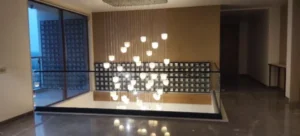
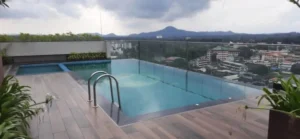
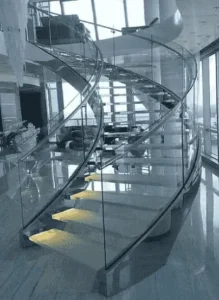
Stainless steel combined with glass panels creates a clean and contemporary railing system. The stainless steel can be used for posts, handrails, or other supporting components, while glass provides visual openness and allows more light to pass through the space.
This combination is particularly popular for staircases, balconies, terraces, and modern residential or commercial interiors. Where glass is used as a safety barrier or railing infill, the glass type, thickness, support system, and installation should be selected according to the relevant safety and structural requirements.
Cable Railing
Cable railing systems use stainless steel cables as horizontal or vertical infill elements. They provide a minimalist appearance while maintaining a relatively open visual field.
Cable systems can work well in contemporary homes, terraces, staircases, and other spaces where maintaining visibility is an important design consideration. Proper tensioning, anchoring, spacing, and installation are essential to the performance of the system.
Picket / Bar
Picket or bar railings use vertical or horizontal stainless steel bars as infill elements. They offer a more defined railing pattern while providing a durable and relatively straightforward solution.
The spacing and arrangement of the bars should be determined according to the intended application and applicable safety requirements. Picket or bar systems can be designed to complement both contemporary and more conventional architectural styles.
Wall-Mounted
Wall-mounted stainless steel handrails are fixed directly to a wall using suitable brackets and mounting hardware. They are especially useful on staircases, ramps, corridors, and other locations where a full railing system is not required or where floor space is limited.
A properly designed wall-mounted handrail should provide a secure and comfortable grip while maintaining adequate clearance from the wall. The mounting substrate, brackets, fasteners, and anchoring method should all be appropriate for the expected loads and site conditions.
Conclusion
Stainless steel handrails offer a versatile combination of durability, corrosion resistance, functionality, and modern aesthetics. From choosing between Grade 304 and Grade 316 to selecting a round or rectangular profile, brushed or mirror finish, and the right infill system, each design decision can influence the final appearance and performance of the railing.
For homes and commercial spaces in Kerala, the local climate and exposure conditions should be considered when selecting the appropriate stainless steel grade and finish. Professional design, fabrication, and installation are equally important to ensure that the finished system is safe, durable, and visually consistent.
If you are planning a new staircase, balcony, ramp, or architectural railing project, choosing experienced professionals can help you select the right solution for your space. Scapes Home Essentials, providers of the best handrails in Kerala, offers stainless steel, glass, aluminium, and custom architectural railing solutions engineered for modern residential and commercial properties.