Different types of glass handrails
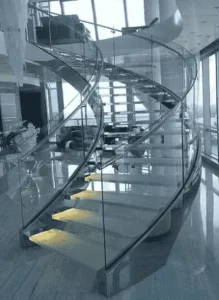
Glass handrails are a popular choice for modern staircases, balconies, terraces, and other architectural spaces because they provide safety without blocking the surrounding view. They also give interiors and exteriors a clean, contemporary appearance.
However, glass handrails are not all the same. They differ in the way the glass is supported and in the type of glass used. Understanding these differences is important when selecting a railing that suits the design, safety, and structural requirements of a project.
According to Scapes Home Essentials, understanding the available options is especially useful when choosing glass handrails in Kerala, where glass railing systems are increasingly used in modern residential and commercial projects.
In this blog, Scapes explains the different types of glass handrails by dividing them into two main categories: Main Railing Systems and Common Glass Types.
Main Railing Systems
Glass handrail systems can be classified according to how the glass panels are supported or fixed. The five commonly used systems are Frameless Glass Railings, Framed Glass Railings, Semi-Frameless Glass Railings, Standoff (Point-Supported) Railings, and Base-Shoe Railings.
Frameless Glass Railings
Frameless glass railings are designed with minimal visible supporting elements. Instead of using conventional vertical posts and large frames, the glass panels are secured using suitable fixing systems such as base channels, spigots, or point-supported fittings.
The main advantage of a frameless system is its clean and open appearance. Since there are fewer visible structural components, the glass provides an almost uninterrupted view. This makes frameless glass railings suitable for balconies, terraces, staircases, and other spaces where maintaining visual openness is important.
The fixing system and glass specification must be selected according to the dimensions, location, loads, and structural requirements of the railing.
Framed Glass Railings
Framed glass railings use a supporting frame around or along the glass panels. The frame may be made from materials such as aluminium or stainless steel, depending on the design and project requirements.
In this system, the frame provides substantial support to the glass, while the glass acts as the transparent infill. Framed railings can be designed with different frame profiles and finishes, making them suitable for both modern and conventional architectural styles.
They can be used for staircases, balconies, walkways, commercial buildings, and other applications where a more defined railing structure is preferred.
Semi-Frameless Glass Railings
Semi-frameless glass railings combine features of both framed and frameless systems. They use limited supporting elements, such as vertical posts or a top rail, instead of a complete frame surrounding each glass panel.
This design provides a balance between structural support and a minimalist appearance. The reduced framing allows more of the glass surface to remain visible while still providing clearly defined supporting components.
Semi-frameless systems are commonly used for staircases, balconies, terraces, and other areas where a combination of aesthetics and structural support is required.
Standoff (Point-Supported) Railings
Standoff (point-supported) railings use individual fixing points instead of a continuous frame or base channel. Stainless steel standoffs or similar fittings hold the glass at specific points and create a small gap between the glass and the supporting surface where applicable.
Because the glass is supported at discrete points, this system gives the railing a lightweight and contemporary appearance. It is often selected for architectural projects where visible framing needs to be kept to a minimum.
The glass panels must be accurately fabricated to accommodate the fixing points. The supporting structure, fixing hardware, glass specification, and design loads must be properly considered before installation.
Base-Shoe Railings
Base-shoe railings use a continuous metal channel, commonly known as a base shoe, to secure the lower edge of the glass panels. The base shoe is fixed to the supporting structure, and the glass is secured inside the channel using an appropriate fixing and glazing arrangement.
This system provides a clean appearance because it can eliminate the need for multiple vertical posts. The result is a broad, uninterrupted glass surface while maintaining a continuous support at the base.
Base-shoe systems can be used for balconies, terraces, staircases, mezzanines, and other applications where a minimal glass railing appearance is desired.
Common Glass Types
The type of glass used in a handrail plays an important role in its safety, appearance, and overall performance. The three common glass types used in railing applications are Tempered (Toughened) Glass, Laminated Glass, and Ultra-Clear (Low-Iron) Glass.
Tempered (Toughened) Glass
Tempered glass, also known as toughened glass, is heat-treated to increase its mechanical strength and resistance to thermal stress compared with ordinary annealed glass.
One of its key safety characteristics is its breakage pattern. When tempered glass breaks, it generally fractures into many smaller, relatively blunt particles rather than large, sharp shards. This makes it a commonly used safety-glazing material in architectural applications.
However, tempered glass should not be selected solely because it is stronger than ordinary glass. The suitability of a particular glass thickness and configuration depends on factors such as the panel dimensions, support conditions, fixing method, design loads, and the requirements of the specific railing system.
For applications where retaining the glass after breakage is important, laminated glass or toughened laminated glass may be considered. Toughened laminated glass combines toughened glass with a laminated construction, providing both increased strength and post-breakage glass retention.
Laminated Glass
Laminated glass consists of two or more glass lites bonded together with an interlayer. Common interlayer materials include PVB (polyvinyl butyral) and other specially engineered interlayers.
Its main safety advantage is its ability to hold the broken glass fragments together through the interlayer when the glass breaks. This can help prevent the glass from falling out of the railing system immediately after breakage.
Because of this post-breakage retention characteristic, laminated glass is an important option for railing and balustrade applications where maintaining the integrity of the barrier after glass breakage is a key consideration.
Laminated glass can also be produced using toughened glass lites. This is known as toughened laminated glass. The final glass composition, thickness, interlayer, and fixing method should be selected according to the structural and safety requirements of the specific application.
Ultra-Clear (Low-Iron) Glass
Ultra-clear glass, also called low-iron glass, is manufactured with a reduced iron content compared with standard clear glass. The lower iron content reduces the greenish tint that can be visible in conventional clear glass, particularly along the edges and in thicker glass.
The result is improved optical clarity and more accurate colour transmission. This makes low-iron glass a popular choice for premium architectural applications where unobstructed views and a highly transparent appearance are important.
It is important to understand that low-iron describes the optical properties of the glass rather than its safety classification. Low-iron glass can be manufactured as tempered, laminated, or toughened laminated glass, depending on the requirements of the railing system.
Therefore, when selecting ultra-clear glass for a handrail, both the desired visual appearance and the required safety-glass construction should be considered.
Conclusion
Choosing the right glass handrail involves more than selecting a design that looks attractive. The railing system and glass type should be selected based on the application, structural requirements, safety considerations, and desired appearance. Frameless, framed, semi-frameless, standoff, and base-shoe systems each offer different methods of supporting the glass, while tempered, laminated, and ultra-clear glass provide different performance and visual characteristics.
For those looking for glass handrails in Kerala, Scapes Home Essentials is one of the trusted providers of modern glass handrail solutions. With a focus on quality materials, contemporary designs, and practical railing systems, Scapes Home Essentials offers solutions suited to different residential and commercial requirements.
By choosing the appropriate glass specification, railing system, hardware, and professional installation, you can achieve a handrail that combines safety, durability, functionality, and modern aesthetics.