
How High Should a Handrail Be on Stairs
The height of a railing on stairs is an important safety component that promotes stability and prevents accidents. Handrails that are properly measured and fitted help individuals of all ages, making staircases safer and more accessible. Building rules often prescribe the optimal railing height to balance comfort, security, and usage, assisting homeowners and builders in remaining compliant while prioritizing safety.
Factors to Consider:
- Local Building Codes: Always abide by local laws, which outline minimum and maximum railing heights as well as other safety specifications.
- User Needs: Consider who will use the stairs, whether adults, children, or the elderly, to ensure everyone’s security and easy access.
- Residential vs. Commercial: Depending on whether the staircase is in a residential or commercial setting, different handrail specifications may apply.
- Comfort: Verify that the handrail’s height and design provide for a secure and comfortable hold for most users.
- Children & Elderly Safety: If children or elderly people will use the stairs, think about adding more lower or protective handrails for additional security.
- Locate Wall Studs: Secure the handrail to wall studs to enhance stability and durability, eliminating weak points in drywall alone.
Factor to Measure Before Installing Handrails on Stairs
- Overall Height: Measure the vertical distance from the top landing to the bottom landing to figure out the proper handrail placement.
- Overall Length: Measure the horizontal distance between the first stair nosing at the bottom and the top nosing at the landing to ensure that the handrail spans the whole staircase.
- Handrail Height: Handrail heights typically range from 34 to 38 inches, measured from the top of the stair tread nosing to the gripping surface. Over the course of the stair run, this height should stay constant.
- Handrail Extensions: Handrails should be at least 12 inches horizontally at the top and one tread depth at the bottom, returning to a wall, newel post, or floor to avoid snagging problems.
- Number of Steps: Most building rules require staircases with four or more risers to have a handrail.
- Stair Width: Stairs wider than 44 inches frequently require handrails on both sides, while widths more than 60 inches may necessitate an additional intermediate handrail.
- Gripability: The cross-section of the railing ought to be cozy to grasp. For circular rails, an outside diameter of 1.25 to 2 inches is suggested.
- Wall Clearance: Keep a minimum clearance of 1.5 inches between the wall and handrail to ensure a secure grip.
Why is it Necessary to Locate Wall Stud
Locating a wall stud is critical when constructing a handrail because it guarantees the handrail is properly fastened to a solid support rather than just the drywall, which is insufficiently robust to support weight. Here’s why:
Reasons to Locate Wall Studs for Handrails
- Safety: Handrails must support a person’s entire weight in the event of a slip or fall. Anchoring into a wall stud gives the strength required to keep the handrail from becoming loose.
- Stability: Drywall can fracture or tear under strain. Screws or brackets placed in studs keep the railing secure and stable.
- Durability: The handrail will last longer and endure frequent use over time without loosening if it is fastened to studs.
- Code Compliance: Building rules frequently demand that handrails be properly secured to structural components, which typically entails mounting into studs.
Final Thoughts
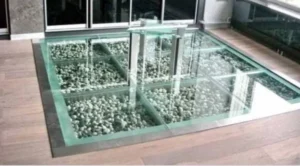
Guaranteeing the right handrail height is crucial for both safety and comfort, whether it’s for a conventional staircase or a modern glass floor in Kerala. You can create a staircase that is both secure and aesthetically beautiful by following standard specifications, taking user demands into account, and complying with local construction codes. Properly built handrails not only prevent accidents but also improve the overall design, making places with glass floors in Kerala safe, elegant, and functional for all. Scapes Home Essentials provides the best in class handrails in Kerala, including superior aluminum, sleek stainless steel, and exquisite glass designs to fit any area and style.